Agent skills for design and writing: what a non-code skill loads, and when it makes output worse
Tools in this post


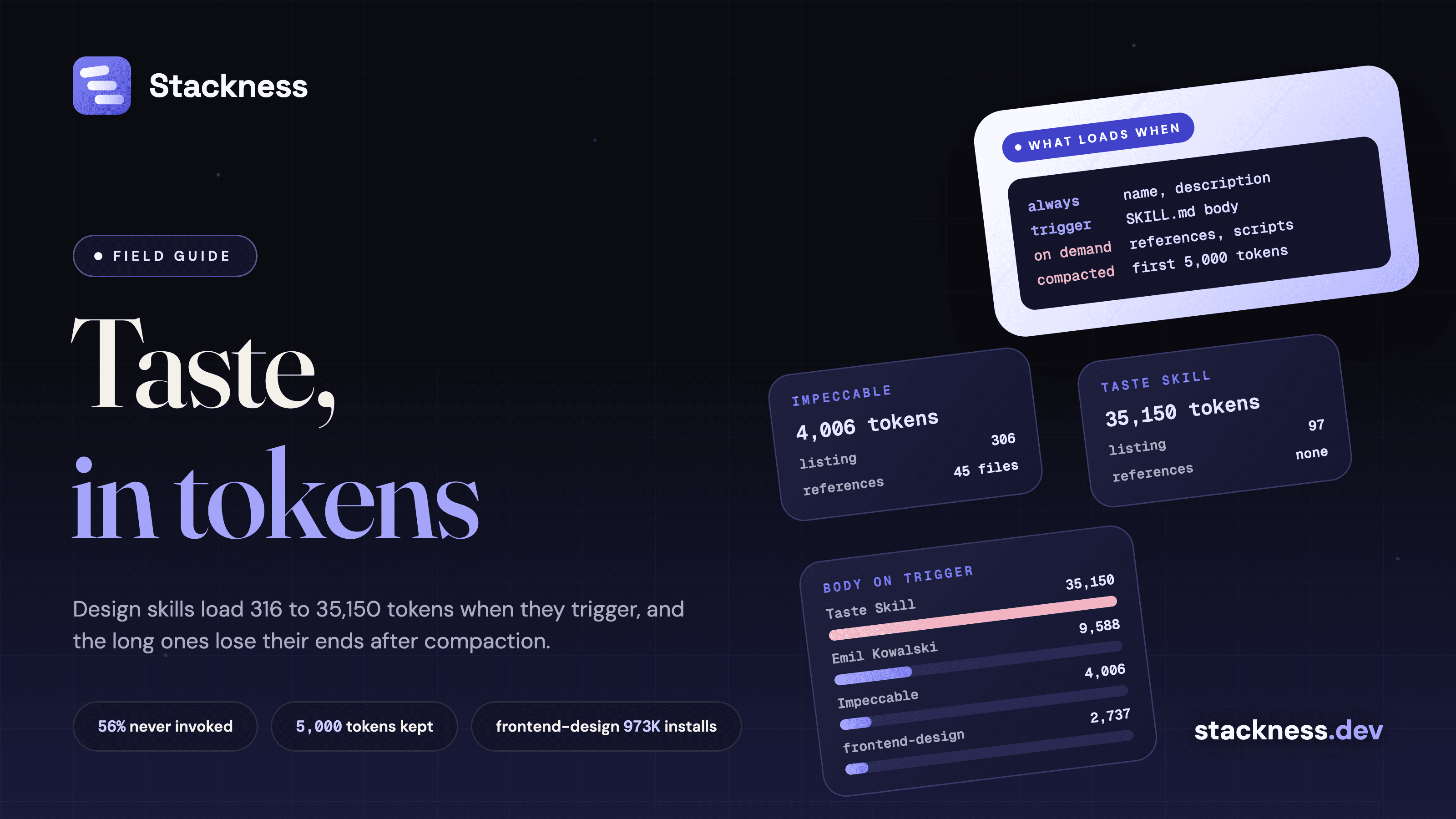
A non-code agent skill is a folder with a SKILL.md file that teaches a coding agent a design, writing or publishing job, and loads only when a task calls for it. As of 11 October 2026, Anthropic's frontend-design is the most installed design skill on skills.sh, at 973,100 installs. What these skills load varies more than a hundredfold: Vercel's web-design-guidelines puts 316 tokens into context when it triggers, and the default Taste Skill file puts in 35,150.
What is a non-code agent skill, and how is it different from a prompt?
A non-code agent skill follows the open Agent Skills specification, which Anthropic published as a standard in December 2025. It is a directory with a SKILL.md file: a name and a description in YAML, Markdown instructions, and optional scripts, references and assets. A prompt lives in one conversation. A skill is installed once, advertises itself in every session and loads its body only when a task matches.
The specification describes three tiers. The name and description, about 100 tokens, load at startup for every installed skill. The body loads on activation and should stay under 5,000 tokens. Reference files load only when the agent reads them, and scripts put only their output into context.
Claude Code, OpenAI Codex, Cursor and Gemini CLI all read the format. Claude Code caps the skill listing at 1% of the context window and drops the descriptions of the least-used skills when it overflows. Codex caps its list at 2%, or 8,000 characters when the window size is unknown.
A design skill loads between 316 and 35,150 tokens
I counted what six design skills put into context with Anthropic's token counter for Claude Opus 5.5, at the commits pinned on 11 October. The listing is what every session pays. The body is what lands when the skill triggers.
| Skill | Listing, every session | Body, on trigger | Read only on demand |
|---|---|---|---|
| web-design-guidelines (Vercel) | 68 | 316 | a rules file fetched from a URL on each run |
| frontend-design (Anthropic) | 67 | 2,737 | none |
| Impeccable 4.5.2 | 306 | 4,006 | 45 reference files, 434,851 bytes |
| logo-design | 344 | 6,133 | 14 references, 1,432 SVG logos behind search scripts |
| emil-design-eng (Emil Kowalski) | 55 | 9,588 | none |
| design-taste-frontend (Taste Skill) | 97 | 35,150 | none |
The instructions are rules and bans. Taste Skill discourages Inter as a default font, bans Fraunces and Instrument Serif "as defaults" and says "NO pure black (#000000)". Emil Kowalski's skill sets easing curves and duration bands, and says "UI animations should stay under 300ms". Impeccable's craft floor asks for 4.5:1 contrast on body text, a 65-75 character measure and letter spacing no tighter than -0.04em. logo-design says its library "is for learning, never tracing".
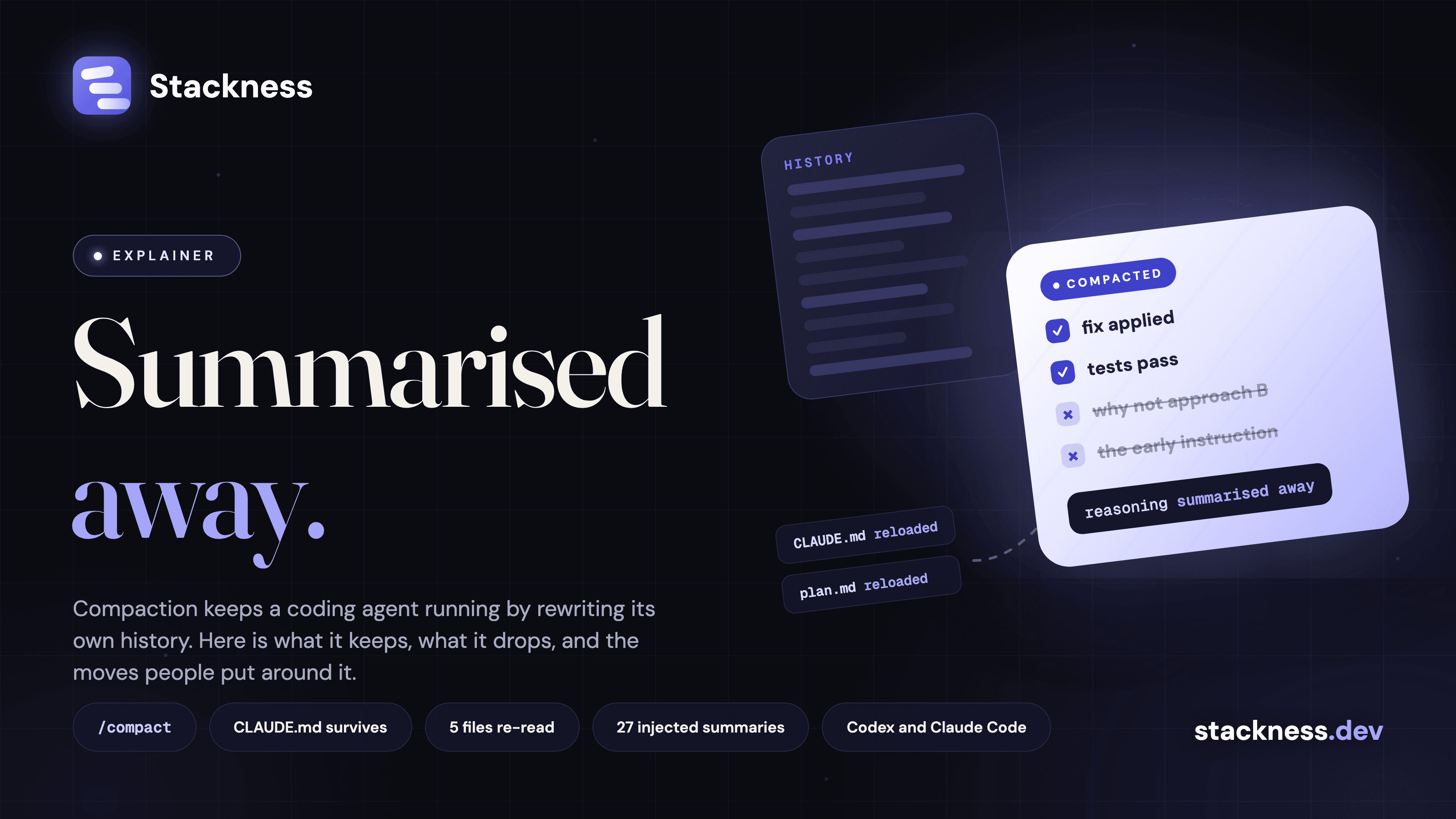
Long skills lose their ends in long sessions. After compaction, Claude Code re-attaches only the first 5,000 tokens of each invoked skill. In Taste Skill, the list of AI tells starts about 20,000 tokens in by my estimate, and the final pre-flight check about 29,000. A compacted session keeps the dials and the design-system map and drops the bans.
I use Impeccable on this blog: its context script loads my PRODUCT.md, and its clarify and distill pass went over this draft.
A skill sits between AGENTS.md and a hook
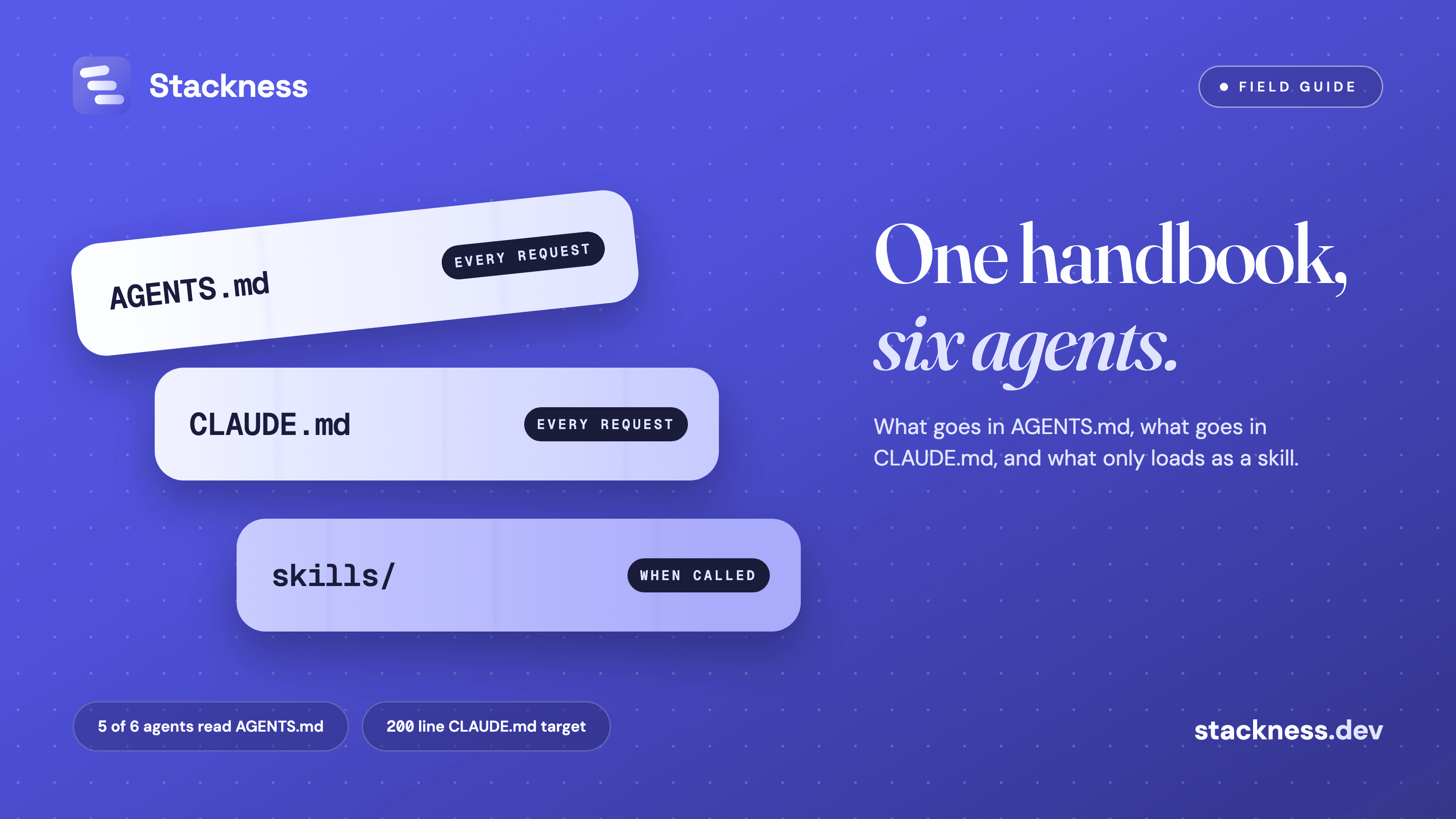
A skill sits between an always-loaded context file and a hook that always runs. Claude Code's features overview loads CLAUDE.md in full on every request, skill descriptions on every request and skill bodies when used, MCP tool names at start, and hooks never, because they run outside the model. Style guides belong in a skill: "reference material Claude needs sometimes".
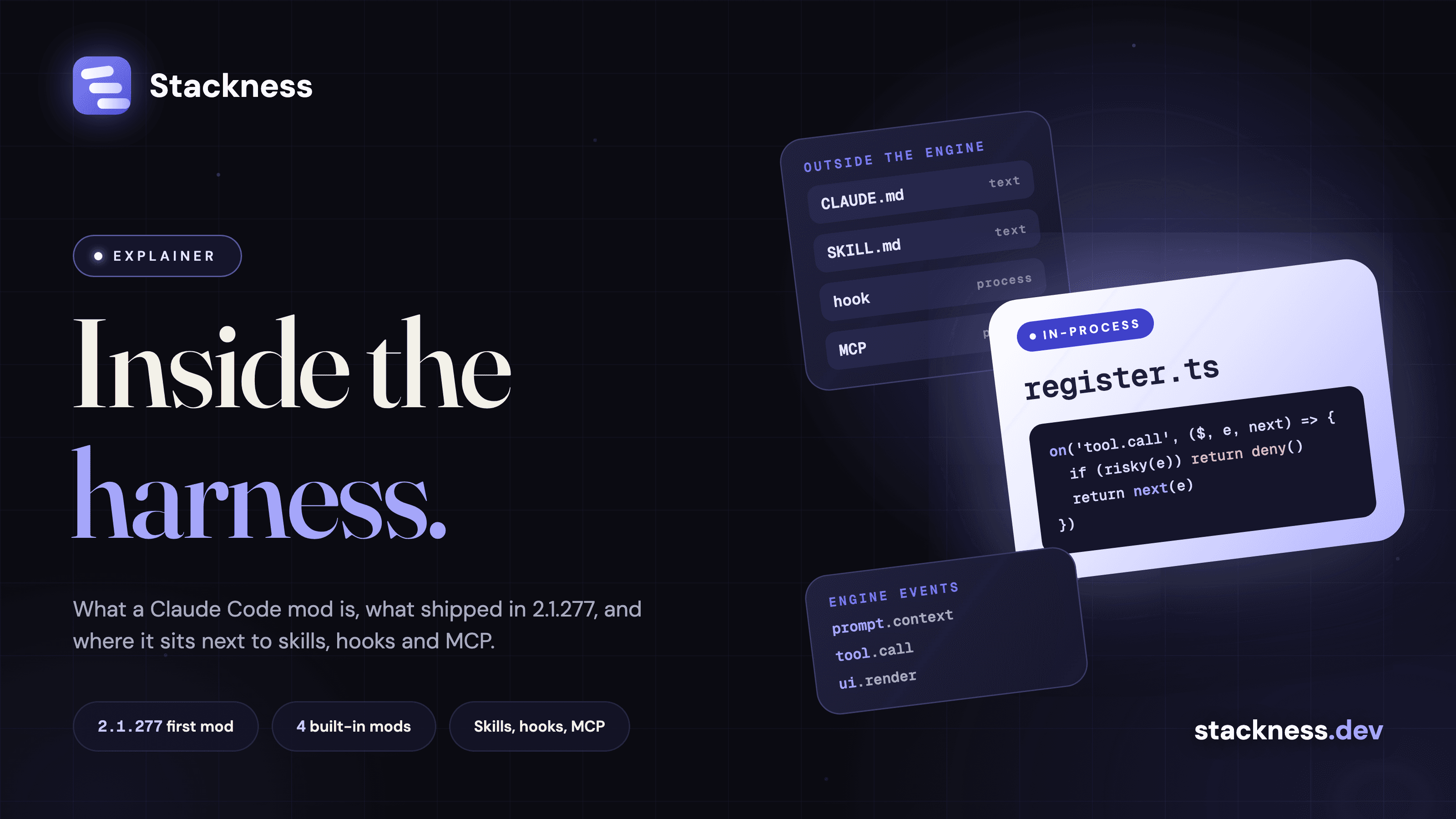
The same page draws the other line: "If a rule must hold every time, make it a hook rather than a prompt instruction." Impeccable ships both. The skill carries the judgement, and a hook runs its design detector on UI file edits, with 59 deterministic rules by its own README. A plugin bundles skills, hooks and MCP servers into one install, which is how Impeccable reaches Claude Code. The earlier post on which layer each instruction belongs in covers the split for code rules.
book-to-skill compiles a book or a style guide into a skill
book-to-skill (MIT, 34,474 stars) turns a document into a skill in two halves. A Python extractor cuts PDF, EPUB or Markdown into clean text. Then the agent writes a SKILL.md of about 4,000 tokens, one file per chapter of about 1,000 tokens, a glossary, a patterns file and a cheatsheet. One command runs it:
/book-to-skill <path-to-document-folder-or-glob>... [skill-name-slug]The author claims 24 to 51 times fewer tokens than loading a whole book to answer one question, counted with an OpenAI tokenizer. An independent paper, He et al. (20 July 2026), built its test packs with the recipe and found the benefit "depends on the agent harness": "Progressive disclosure buys context, not intelligence." It tested book question answering, not style guides. The README suggests turning a brand book into a skill, but no such run is published.
Two rules come with it. The generated skill must "Never copy raw book text", and skills from copyrighted books stay private. A re-upload of book-to-skill under another account stole crypto-wallet data, per the maintainer's notice of 17 August. The move is packaging domain workflows as reusable agent skills, and its book-shaped variant is deriving agent rules from classic design books.
The non-code skills developers installed most in the last month
The most installed non-code skills in the last four weeks were Matt Pocock's writing-for-agents, Taste Skill and Matt Pocock's writing-beats, on skills.sh counts read on 11 October. skills.sh is run by Vercel and counts only npx skills add installs with telemetry on, so git clones and plugin installs are missing.
| Skill | Installs, last 4 weeks | All time | GitHub stars |
|---|---|---|---|
| writing-for-agents (Matt Pocock) | 145,051 | 397,800 | 284,300 (repo) |
| design-taste-frontend (Taste Skill) | 111,442 | 590,000 | 94,539 |
| writing-beats (Matt Pocock) | 101,594 | 435,800 | same repo |
| frontend-design (Anthropic) | 92,638 | 973,100 | 180,300 (repo) |
| web-design-guidelines (Vercel) | 86,588 | 720,800 | 32,200 |
| emil-design-eng | 68,570 | 341,100 | 45,134 |
| Impeccable | 47,309 | 324,800 | 79,592 |
I left out design-mobile-apps: 562,179 installs in four weeks against 14 GitHub stars and a failed Snyk audit on its own skills.sh page. Stars and installs disagree elsewhere too: book-to-skill has 34,474 stars and 7,300 installs.
The skills in this month's trend feeds are small by installs. yomiyasu, which rewrites AI-generated Japanese, has 8,400. answer-me-with-html has 2,300, logo-design 399 and the motion-film skill onetake 81. publishing-kit, which posts one Markdown file to four platforms, is not on the board.
When does adding a skill make the output worse?
A skill makes output worse when it does not trigger, when there are too many or they are too long, when two skills disagree, and when it carries something hostile. In Vercel's eval of 27 January, the agent never invoked the skill in 56% of cases and scored 53%, the same as with no docs. An AGENTS.md index scored 100%. Vercel runs skills.sh.
- Too many, too long: in SkillsBench (v4, 14 June), 13 of 87 tasks got worse with skills. Four or more skills added 10.1 points against 19.0 for two or three, and comprehensive skills added 0.7. Skills the agent wrote for itself scored 8.1 to 11.5 points below no skills. None of its tasks were design or prose.
- Skills disagree: Taste Skill's default headline uses Tailwind's
tracking-tighter(-0.05em), below Impeccable's -0.04em floor. Taste Skill bans Fraunces as a default, and onetake ships it. Anthropic's frontend-design lists tinted near-black as an AI tell, and Taste Skill prescribes off-black. With two installed, the agent picks. - Hostile content: Snyk scanned 3,984 skills and found a critical issue in 13.4% and 76 confirmed malicious; Snyk sells the scanner. Vercel's web-design-guidelines fetches its rules from a URL on every review, so what it loads can change without an update.
No independent eval of any design or writing skill exists. yomiyasu scores its output 100 out of 100 with its own linter.
Who needs a design or writing skill, and who can skip one
A design or writing skill helps a developer who ships UI or prose without a designer or an editor and wants the agent to follow taste rules on demand. It also helps a team with a style guide that agents should read only when a task touches it. Pick one design skill. Two give the agent contradictory rules.
Skip it when a rule must hold every time, which is a hook or a lint rule, or when the design system already lives in components the agent can read. On Stackness, 7 real profiles list Claude Code, 6 list Cursor and none lists Gemini CLI, as of 11 October 2026 (data sources), and no real profile lists a design or writing skill yet. The numbers are small. The agents sit in the AI coding tools developers list, next to the design and collaboration tools these skills try to imitate.
Where to start with agent skills for design and writing
Install one design skill and look at what it costs before you keep it. Emil Kowalski's repo installs with npx skills@latest add emilkowalski/skills. In Claude Code, /context then shows the Skills row with the listing's size. If your team has a style guide, run book-to-skill on it, keep the result private, and check that the SKILL.md stays under 5,000 tokens so it survives compaction.
Tools in this post
 Impeccable
 onetake


 and 12 more from this post
Use any of these tools?
Put them on a Stackness profile, say how you use each one and see who pairs them the same way. It takes a couple of minutes.